The Traveling Yogi
A couple of years ago, I began a morning meditation routine that started on Facebook and somehow migrated to TikTok. I rarely mention my books, maybe make a passing comment to my writing, and concentrate on a word for the day that either inspires or encourages me. It began as a spoof to see if I could find that many inspirational words, but throughout the time I’ve been doing it, it’s become a balm for my soul. A very selfish moment that I reminded myself to do every day, mostly because I needed the comfort. Selfish of me. Then some of my friends mentioned how a particular comment I’d made caused them to smile or reached them in a deeper place. Those comments made me feel honored and somehow responsible for offering something of import, something that others could relate to. For a while, the meditations became difficult, then Ian, my husband, and I traveled to Spain, and the meditations became a different type of joy. History stitched us into her streets, and the thrill of discovering brand-new places, strange sounds and tastes and textures intoxicated me. There’s nothing like stepping into a five-hundred-year-old cathedral and accidentally photo-bombing an exquisite bride and her father leading a twenty-foot-long white velvet train. I did my meditations on mountains overlooking Barcelona and Ronda, or as the cathedral church bells rang in Cordoba. Every moment was magical, as traveling often is. We are traveling now, and I’ve found special garden spaces and quotes on benches, a small fountain, and a deep blue stream that moves quickly and counts a pair of elegant swans as its residents. My meditations include those natural elements, often inspiring me in a way I don’t feel at home in my little neighborhood forest. Ian and I have seen this place from behind handlebars, riding our books up long, steep hills (and down the same), through college campuses and down brick-building-lined city streets. He calls this city of Ann Arbor “romantic,” and though I would agree, I’d rather be meandering down the rocky streets of Seville. But I’ll meditate everywhere. Namaste.
The Emotions of Writing a Memoir
For the past couple of years, I’ve worked on a memoir about the loves in my life, which has been a process I couldn’t have predicted when I wrote the first line. So many questions arose throughout the work (which is almost done — first draft goes to my agent by Labor Day), some of which I anticipated while others appeared born of the memoir-writing process itself. The first mini-draft (an overgrown outline) arrived linearly. I began with the first relationship and worked my way through to the current moment, but even though early readers loved it, the shape of that story didn’t meet my own expectations. I wanted the shape to reveal some of the relationships themselves, and I knew it would take a bit of massaging the work. The second draft was more complete, but I began finding it difficult to poke and prod my own memories. And even though I thought I was revealing a lot, I know that my current relationships with the people I’ve loved caused me to hold back. In other words, the old pick-up-the-pen-and-open-the-vein writing adage is true. I needed to pour the blood onto the page. Third draft. I realized several themes had risen in the work. I split each person’s story into different structural formats. The first marriage, torn apart by violence, remained in capsules told in a more-or-less accurate timeline. The pain of that abusive relationship couldn’t be toned down, but I contained it within first-person scenes with titles that define the pithiness of the “chapters.” The other relationships, very different from each other, required an equally different type of “telling.” One is told in travelogue, while the other uses a poetic format. Fourth draft. All of the pieces are in play, and the rewrites have been done. I’m waiting for one last piece from my writing group (who I talk to today), then I’ll rewrite what I’ve given them. This morning, I spent hours reading and working on my patio… Final draft: I tell my students all the time to run their work through a grammar program before sending it to an editor or agent, and I follow my own advice. I’ll be spending time checking sentence structure, subject/verb agreement, and passive voice before I package the final product up and send it off to my agent. I have three weeks to finish this puppy. Wish me luck! Peace, D
Write On The Beach 2022!
I’m living where I always wanted to: a view of the ocean out my windows. Now, I want to share this space with other writers who need to get some work done and might not have the space or funds to do so. I’m opening my second bedroom for certain writers on a donation basis. My way of giving back. I hope that whoever stays here in this place with Izzy and me can write and breathe and relax. If you want up-to-date information, join my FB page for the Writer’s Room.
Rewired Creatives
Are you in need of coaching, editing, ghostwriting or marketing and promotion services? Then Rewired Creatives, Inc. can help! Our expert team has extensive publishing experience that includes more than 50 books, hundreds of articles, award-winning short stories, and poems. We understand what it takes to bring a project from concept to fruition, and then promote that finished piece to readers. We’ve done it successfully for our clients and can do it for you! Rewired Creatives also hosts seminars, retreats, and workshops throughout the year. Looking for a custom-designed workshop for your organization focused on any literary genre or element of the writing process? Reach out to us and let’s talk!
COMING SOON! You Are Divine: Searching for the goddess in all of us
Sometimes books are written in a matter of months (that hasn’t happened to me, but I have friends who whip books out like they’re as simple to produce as a signature.), and sometimes it takes years. I have several novels I’ve been working on for at least ten years. And then there’s You Are Divine. This book has gone through several iterations throughout the past couple of years, but the version which will be published in January by Llewellyn Worldwide is the best, I do believe. The book is meant to offer feminine beings a glimpse of what divinities looked like when they were female. Those deities come from every religious philosophy and every culture. While researching the book, I interviewed dozens of women about their own spiritual journeys and their stories are fascinating. I do hope you enjoy them. I’ll tell you lots more as the months pass, but for now, I would like to ask you all to contact me about getting together with your women friends or your women’s group or your book club or your religious group. I’m now booking events from mid-January throughout April. Contact me! [contact-form][contact-field label=”Name” type=”name” required=”true” /][contact-field label=”Email” type=”email” required=”true” /][contact-field label=”Website” type=”url” /][contact-field label=”Message” type=”textarea” /][/contact-form]
Changes in Latitude: Writing Under an Assumed Name
Alone every night in that cinderblock house during a frozen upstate New York winter, I realized I was on my own for the first time in my life. No family members to take Jen for a few hours if I needed to work or do errands. No friends around the corner to grouse to at night. I’d never lived in a place more desolate or quiet. The scraggly field in front of the house turned brown as the days began to cool off and August rolled into September. The house settled into black corners by 4:30 if I didn’t turn on a few lights. The bedrooms, on the back side of the house, held the cold and dark. Every morning, I found myself pulling aside the homemade watermelon-patterned curtains I’d hung at the small kitchen windows and getting lost in memories. I’d always kept a journal, and every morning in that bleak place, I’d sit at the rickety kitchen table while Jen sang to the Cheerios she pushed around on her high-chair tray, and I’d write. My ear became attuned to the sounds of magpies and crows every morning, the whine of a car coming a mile away, the subtle shift of the leaves bringing a cooler wind that would lead into winter within a few weeks. I started sketching out stories, and when Jen asked me for bedtime tales, I began telling her mine, even though I had no pictures to show her. Only words she could not yet read. During our long weekly rides to the grocery store, she’d beg for another chapter in Klorinda’s life, the fairy creature I’d created. Jen would put me on the spot sometime, asking a question or making an observation about what I was telling her, and I had to stop, do some quick editing, and move on. Telling the story on the fly. Literally. When I think back on it now, I realize it was an incredible way to connect with my child, but it was also one of the best editing tools I’ve ever been forced to use. When there’s a reader sitting right in front of you, expecting you to perform, you’d better not let them down.
Writing Inspirations: The Beginning
Nehru jackets in thick, scratchy brown wool. Thirty-two-inch bell bottoms my father wore in the Navy. His double-breasted pea jacket, the warmest jacket I’ve ever worn. A Roaring Twenties-style hip-length top over a pleated skirt that came to mid-thigh, pink and ivory colored with stripes accenting the top’s v-neck. A vintage 1940s brown tween winter coat, large circular buttons holding it snug from its skinny waist to its Peter Pan collar. A full-length winter wool, brown monk’s cloak. A floppy pink felt hat. A tan suede fringe jacket with a 12” beaded swing. The more I wanted to fit in, the more unique my clothes became in Junior High and High School. No one else wore their father’s Navy pea jacket or a vintage coat at Everett High in 1970, though most of us made statements with our clothing that equaled what was going on in my poetry and those scribbled pages mirrored the questions I had about life and war and the tumultuous world that existed around us. I knew I wasn’t alone. A lot of my friends wrote poetry or kept journals. Our idols were people like Bob Dylan, whose voice sucked yet his songs spoke so eloquently that no one cared, and Emily Dickinson, who wrote about being alone. We honored those dissident poets unafraid to craft their words into ploughshares: Allan Ginsburg, Lawrence Ferlinghetti, Jack Kerouac, and Gwendolyn Brooks, the first African-American to win the Pulitzer. Those writers, the epic poems of Ginsburg, the unconventional travel writings of Kerouac, the personal influence Ferlinghetti wielded, and the simply stunning poetry of Gwendolyn Brooks all branded into my brain, upon the DNA of my writing memory, until I could pick their threads out of the tangled cords that have made me a writer. Brooks said, “I am a writer perhaps because I am not a talker.” Suddenly, I felt a kinship with someone I had never met, someone I respected as being at the top of her game. Years later, in a college classroom many miles from where I first read Brooks, I found myself swallowed by a powerful flashback, almost unable to continue reciting her work to a room full of doe-eyed, nervous, beginning writers. We real cool. We left school. We lurk late. We strike straight. We sing sin. We thin gin. We Jazz June. We Die Soon. Ginsburg’s epic poem, howl!, became the title of the literary magazine my colleague, Rhonda Morris, and I started when we taught at Lake City Community College in Florida. I liked to think we were as cutting-edge as he was in our own ways. We were the first to publish an online college literary journal in the Southeast, and the first of any community college. I like to think Ginsburg would have appreciated that. And when I visited Ferlinghetti’s bookstore, City Lights in San Francisco, and saw Kerouac’s scrolled manuscript for On the Road at the American Writer’s Museum in Chicao, I felt as awed as most humans do in the great cathedrals of the world. Oddly enough, I have no words to describe moments like those. *** I worked during those years: delivered 100 meals a day to patients at the nursing home, then gathered the trays, and cleaned the kitchen afterwards, washing all the dishes, and bleaching the kitchen floor. I was 14 and I made $1.40 per hour. I went home every night smelling like bleach and rotten foot. My white leather nurses’s shoes (that my mother had polished only the day before) bore the brunt of the wear and tear, cracking and splitting. No matter how many times my mother washed the laces and polished that white leather with a sponge-tipped bottle, the shoes were equally disgusting the next time I came home. My supervisor, a cruel hag who must have hated that soul-stealing place, fired me when I didn’t mop the kitchen to her satisfaction. I’ve never been so happy to lose a job or to have that experience to draw from. I know how my characters feel when they’re bone tired. I’ve never had a job wear me out as much as that one. As horrible as it was, though, there was a bright light. One of the patients, Jane Wilkinson, a woman in her early sixties, a former English teacher who’d traveled and seemed in much better health than most of the other patients in the home, hired me to handwrite letters to her family. I’d go to her room when I was finished with my job and sit on the chair beside her bed as she dictated to me. She was the only patient in the home who didn’t have white hair. Hers was barely half an inch long, dark brown, and often stuck up at odd angles. She laughed freely, asked me questions about school or what I was reading, and gave me several books she thought I’d like. One was Travels with Charley by John Steinbeck. She was right. I loved Steinbeck, and years later, I’d think of Jane as I taught Steinbeck at the Honors College at the University of Central Florida. The letters she dictated and I wrote often included stories about her life, depending upon who the letter was for, and those stories transported me far from the putrid-smelling rooms where people never moved out of their beds, never saw family members, never breathed fresh air. She’d sometimes have to say my name in order to retrieve me from my daydreams. On my walks home, I’d think about those stories and wonder if she’d mind if I stole bits and pieces. When I got fired for not washing the floor with bleach, I went upstairs and told Jane, who hugged me for a moment, then pulled back and said, “I guess I won’t see you anymore, huh?” Ironically, even though I did continue to visit her, the reason why she dictated those letters to me became clear. Within a couple of months, she
A blast from the past: sharing my essay Amistad (originally published by Provo Canyon Review, 2015)
Hello, Everyone! I’ve decided to share some of my previously published essays, since it’s nice to have them all in one place, but I’ll still continue to blog about writing when the spirit moves me, so stay tuned for that, as well. Sometimes I go through phases and write in different genres. I’ve been a novelist for years, but lately, the essay form is luring me once again. More on that later, but for now, here’s an essay I wrote after facing death in the eyes. Nothing tougher, huh? Cheers, Dawn ~*~ Amistad When both my best friend, Carol Quinto, and her husband, Mike, were simultaneously diagnosed with cancer, I kept expecting that happy ending Hollywood always gives us, expecting that the diagnosis was a wrong one, that both of them would live. That’s not what happened. In an interview with journalist Steven Schaefer, filmmaker Stephen Spielberg said this about some of his works: “When you make historical movies it’s like getting into a time machine and you steer a time machine back and try to experience what they experienced. It’s a little bit like touring Europe and you go to Rome and look up at the Sistine Chapel and pinch yourself to say, ‘Am I standing here? And is this the real Sistine Chapel?’” I’ve always loved movies, spending countless hours in front of a screen, gazing at classics starring Clark Gable, Meryl Streep, Robert Redford, Fred Astaire, Mel Gibson, Rita Hayworth, Anthony Hopkins, Vanessa Redgrave, or Bette Davis. Good or bad—it makes no difference: movies are my passion. My friend Carol wasn’t as much of a movie watcher as I, but I’d often bring one over anyway after she had become bedridden. She used to say she never watched television, and it was true: she’d much rather have a book in her lap. But if I brought over a romantic comedy like “Sleepless in Seattle” or “Pretty Woman,” she’d watch it. I brought over “Amistad” one day, telling her how incredible the movie was, how phenomenal the acting. A historical movie, I told her. An important film. In my mind, I fantasized that watching this drama would lift her spirits, would take her away from reality as Spielberg described. Make her pinch herself to see if her life was real. “I can’t watch this,” she said during the scene of the slaves sandwiched in the bottom bowels of the slave ship. “No one should be treated that way.” She cried, deep hacking sobs at the end. I felt guilty for suggesting it. When I simply could no longer sit by and watch Carol and Mike suffer silently, my own selfish need to help them propelled me into putting together a “secret” fund for them, a collection from our writer friends to help pay the exorbitant hospital and medication costs—bills that had propelled Carol and Mike into one bankruptcy five years ago and were now sucking them into another. Because she was proud as well as stubborn, I let Carol keep up her façade and forced everyone to promise not to tell her where the money was coming from. She continued to answer the phone brightly and cheerfully, asking friends and fellow writers about their own lives, rarely divulging her fears to anyone but her closest friends and family. I was one of those friends, one of the people with whom she shared her frustration with the welfare department. I encouraged her to call the insurance companies to see whether there was anything more they could do for her. I was one of the people who picked up her medication or transported her to the doctor’s. To all the others, she was an eternal optimist, a Pollyanna. In some respects, I’d agree, but I also knew the Carol who loved a good political argument. Now that I think back, I figure those discussions were her way of releasing the anger she felt about being sick. She’d get into it with me about how much she hated what the American public was doing to President Clinton or about her belief that certain people got what they deserved or that feminism was overblown (she knew that one always got me going). We got into a lot of arguments—and I always lost. She loved playing the underdog and did it well. Sometimes it hurt. I’d get off the phone and slink to the other end of the house to cry on my husband’s shoulder, swearing never to broach whatever subject it was with her again. But when she believed in you and was on your side, there was no one more loyal, no one more liable to go to bat for you. And when it counted, Carol was always there for me. In mid-January, Mike had just died and Carol decided she needed to put together her will. She asked me to contact a notary and bring him to the house to witness the will she had handwritten. We needed two witnesses, so I contacted my friend Gail and her husband, Joe, both of whom knew Carol but not her family or her other friends. “Don’t tell anyone else about this,” she said to me. Her thin hand clasped my arm. Still strong. “Promise me.” I did. In the hospital during a painful episode the week before, Carol talked to me about ending her life, confiding that she’d put aside a bottle of pills at home and might need help. I swallowed hard, told her I knew how she felt, but that I wasn’t sure I could help her. No matter how much I loved Carol, how much I hated seeing her go through the years of knowing she was going to die, how it killed me to see her grieve when her husband died, how difficult it was to know the pain and embarrassment she endured day after day when forced to
Writing from the Beach
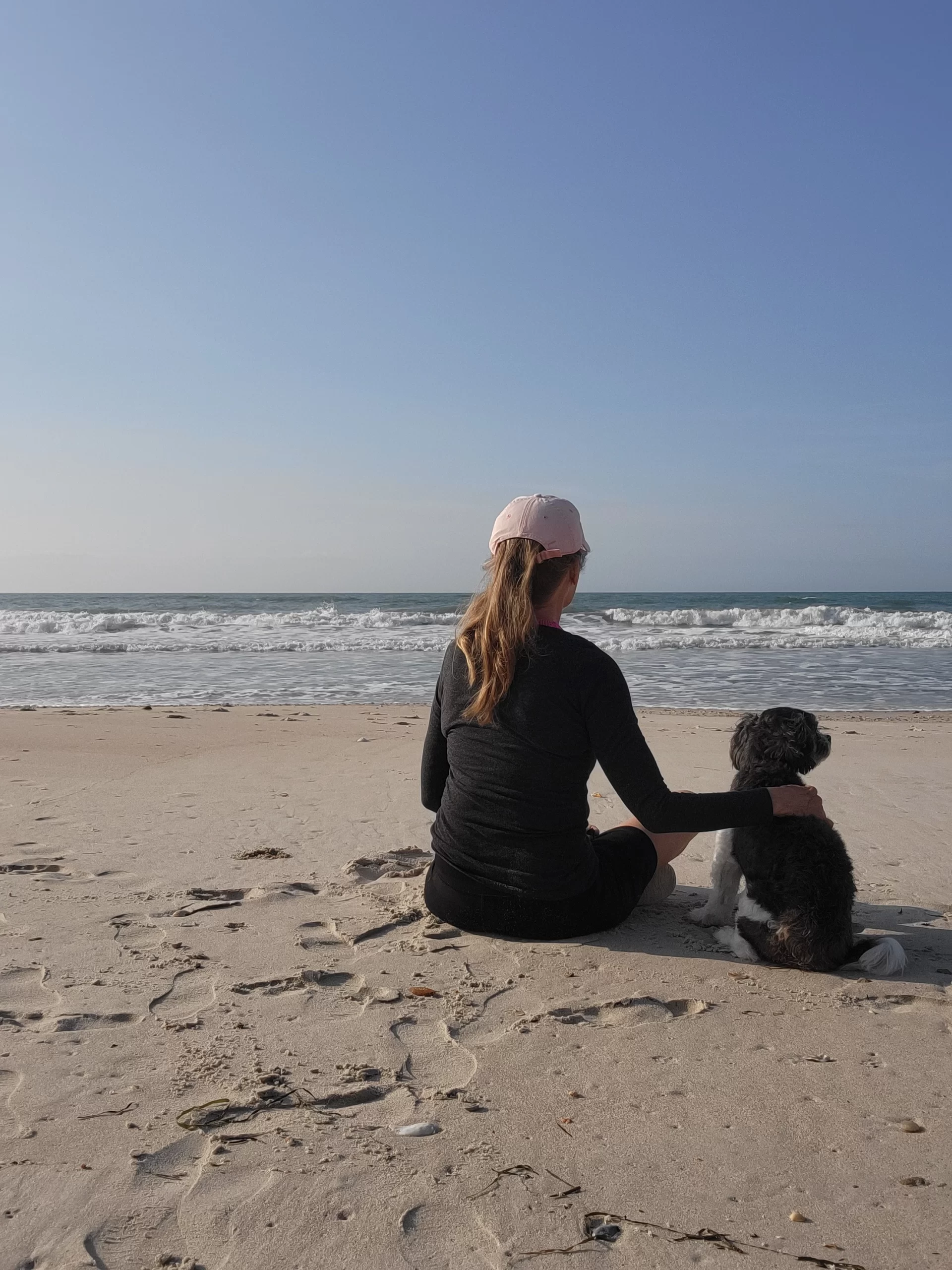
I’ve been writing since I was nine, and throughout this long, often rocky, career, I’ve always dreamed of writing in a house near the beach. I imagined a cold, winter beach, where I was the only person on a long stretch of sand. For me, staring at a stretch of water, preferably one that crashes and roars, gives me permission to write the stories that have rattled around in my head every day of my life. When I chased grasshoppers in the empty lot across the street from the projects where I grew up, I longed for those days when my father would pile all of us into the Buick for a ride to Revere Beach. There, I could breathe. We dug up clams, searching on the wet, hard sand for the telltale bubbles at the surface, digging quickly to find the littlenecks as they burrowed their way under us. But, to be honest, I always thought my dream was unattainable. I’m a writer, after all. A mid-list writer who makes ends meet by teaching in an MFA program and taking on editing/coaching clients. That means I usually make very little from my own writing. Instead, my hours are full, and I work all day, every day, on other people’s work. The dream of writing novels and keeping sandy shoes by the back door has been pushed further down on my bucket list. Still, I dreamt. ### Then, the pandemic came, and everything changed. (I know that sentence I just wrote is probably already a cliché.) I watched as the world crumbled around us and realized that I had no guarantee of next week, never mind years in the future. We spent six months in isolation, and during that time, my partner and I talked about our own individual dreams. His was to buy a house; mine was to write on the beach. So, I sold him my house and moved to the beach. With no safety net. Eudora Welty said, “Feelings are bound up in place, and in art, from time to time, place undoubtedly works upon genius…. It may be that place can focus the gigantic, voracious eye of genius and bring its gaze to point.” I believe that what she meant is that place is not only an effective tool in developing a piece of writing, but that place, in reality, has an effect on each of us. Moving to a new place means upending your life, and when that place is filled with furniture and kitchen items that belong to someone else, it takes a bit of getting used to. At first, I felt like I was on vacation. Tourists still roamed the streets, the hot North Carolina end-of-summer luring them to the beach. I had company, I settled in, and I started editing a novel which is, ironically, about traveling and how we bring a piece of us to every place we visit. It was the perfect project to work on in my new place. Still, I felt like an imposter. I was now that “writer who lives on the beach.” I couldn’t believe it. ### Three months later, it’s better than I ever imagined. I’m home. Walking the sand every morning with my dog, Izzy, is soul-cleansing. I’ve found a yoga group and take classes three times a week. My bike, fondly named Ruby, is a 40-year-old relic with a Hawaiian fabric-covered basket, a true beach bike with no speeds or hand brakes. Since I’ve been here, I’ve worn out one pair of Sperry sneaks, and keep at least six pairs of flip-flops in a basket at the door. I recognize people when I shop at Publix or at the Holiday Golf Cart Parade. I smile every time I drive over the bridge that separates the island from the mainland, that moment when I can see the Cape Fear River below me and the Atlantic Ocean in the distance. I heave a huge sigh every time. My move to the beach came at a perfect time in my life. Not only has my anxiety level decreased, but my physical body has become stronger. And looking out the window at that little slice of ocean, well, it never gets old. I’ve gotten into the habit of taking a photo at the same place every day, and I began a daily seaside meditation that my Facebook friends seem to really enjoy. A couple of weeks ago, a writer colleague of mine, Nancy Christie, asked me to join her podcast to talk about how setting affects both the writer and the writing. Talking to her about my dream and about how I accidentally backed into it made me realize how genuinely lucky I’ve been that all of the pieces fell into place and paved the way to the beach. I don’t take that lightly (though I remember all the years I struggled to make ends meet, sometimes eating a can of beets for dinner, and how hard I’ve worked for the joy of having my words end up between book covers), and I find myself grateful every day. Though the recent uptick in cases has caused me to isolate even more than earlier this year, I don’t feel alone or anxious. I am happy to do my work here at my rehabbed desk, where I can look out the window at the squadrons of pelicans, sometimes 50 or 60 at a time, as they stream by, barely skimming the tops of condo buildings that line the beach. If work becomes stressful or I’m missing someone, a walk on the sand releases the tension and reminds me that the world is bigger than we are. We are merely mortals. No matter how much I travel, the place that moves me most is a stretch of ocean, no matter where it is, and it seems that this particular place, this beach, the town, the island itself, is where I’m supposed to be. Peace to
Writing Through the Tears

The Virginia Center for the Creative Arts in Sweetbriar accommodates approximately 24 artists on a piece of property that rambles lazily over hills and pastureland. A hundred-year-old stone barn houses studios of all shapes and sizes so that everyone can be satisfactorily creative. Every evening after dinner, the artists, musicians, writers, composers, and artisans who have worked all day on their various projects commune in a room where a piano gets center stage and a fireplace fills one wall. The fire reflects warmly off a wall of sliding glass doors that look spectacular when the fire spreads to the roof . . . but that’s another story. At one of those after-dinner get-togethers approximately a dozen of us circled the piano, Donald, a world-class composer, heartily played show tunes. We sang and laughed for a while, and I was struck by the level of intense artistic abilities manifested in the people around me. One man had just signed a contract to compose a major symphony. The blond woman from New York had written for McCall’s and was deep in revisions for a nonfiction book, while her husband, a self-effacing man with a boyish habit of flipping his charcoal-hued hair back from his face, freely shared his problems with character in his latest literary novel. A tall, thin artist, who wore black and dyed her hair to match, was the complete antithesis of the large, flashy pastel paintings she’d shown the night before, and the senior member of the group was agent to a major literary figure. Since he’d shared stories of the author’s upcoming book about his problems with depression, it seemed natural that the subject of why we do what we do came up. Why did we put ourselves through the rejection and torment of being artists? “To share the songs going through my head,” Donald the composer sat at the piano, taking part in the discussion without missing a note of “New York, New York.” “I want to get my fingers in the mud and shape it, work it, really see something arising out of the muck . . . .” The artist to my right flexed her fingers in the air, as if molding a vase at that very moment. “Could you live without it?” The woman I’d become friends with, a thirty-something mother of a toddler, sat next to me on the tweedy couch. She asked the question of the crowd in general, and a thoughtful moment of silence fell over the crowd before someone piped up: “I couldn’t. Nope, it’s who I am.” The agent threw out: “What if you were given the choice of losing your family or your art? What would your choice be?” One by one, the men in the room answered: “My art.” The women, for the most part, remained silent, except for my young-mother friend. “I don’t have to think about that at all. My child comes first.” She settled back into the couch, having already told everyone at dinner about her young son and how much she missed him. There was no doubt that she spoke from her heart. And in one of those moments when the mouth is engaged before the mind, I blurted out, “I think I could lose everyone I love and make it through my grief by writing. But I don’t think I could make it through my life without writing.” My friend’s chin dropped, and she leaned forward, perched precariously on the edge of the couch. “You can’t possibly mean that.” “I do,” I replied, and a two-hour-long discussion about whether or not we’d give up art for love or vice versa began. I never changed my mind, though I felt guilty when relaying the story to my husband and daughter upon my return home–especially since they had spent the time I was gone (two weeks) without power, water or heat because of a mid-winter storm. * * * Fast forward seven years. I’ve moved from the chilly North to the warm, humid South. I’m still writing, though I can’t say I’m making a living at it, and there have been some changes in the publishing world that would defeat the strongest. But still, I write. Because I can’t not write (and that’s a purposeful double negative). I have a writer friend with whom I have many passionate conversations. It is during lunch one day that the subject of living and dying for our art comes up. Surprisingly, this relatively successful novelist has the same answer that my friend from the Virginia Center for the Creative Arts had, and she sits across the table from me when I answer, her face as stunned as the young mother’s was. “You mean to tell me if someone said they’d take away Bobby tomorrow, you’d keep writing?” “Yes,” I answer. “I’d miss him horribly, but think about it: if you lose someone, how do you get through it? You write in your journal or you sink yourself into your novel. Somehow that writing process gets us through the grief and helps us to deal with it. As long as I can write, I can deal with anything. Even losing my husband.” “Okay, imagine I’m the devil. I’m going to take away your children or your pen. Choose.” I squint at her and we laugh, but she persists, telling me I wouldn’t want to lose someone I loved and that if I had the power to change it by stopping writing, I would. I acquiesce. Maybe so, but would I be able to live without writing? I don’t think so. * * * A couple of years later, my writer-friend Carol’s death would put that belief of mine to the ultimate test. How did I get through it, those long and torturous days when I sat next to Carol’s bed and watched her suffer with a cancer that ate away her backbone and broke her body so completely that she could do nothing for herself except to